Table of Contents
ToggleYour League of Legends profile is more than just a win rate and ranked tier, it’s an extension of your identity in the game. And at the center of that identity sits your summoner icon, a small but surprisingly meaningful part of how you present yourself to teammates, enemies, and the community. League of Legends icons have evolved from simple cosmetics into collectible artifacts that tell stories, commemorate championships, and celebrate the game’s richest moments. Whether you’re a casual player hunting for that one perfect icon that matches your main, a competitive player chasing esports team branded icons, or a collector determined to own every seasonal release, understanding the landscape of League of Legends icons is essential. This guide breaks down everything you need to know about obtaining, understanding, and curating your collection in 2026.
Key Takeaways
- League of Legends icons are collectible cosmetics that serve as your digital identity, with categories ranging from common champion and seasonal event icons to rare prestige and permanently retired designs.
- You can obtain icons through in-game RP purchases, battle pass rewards, free event missions, and limited-time bundle offers—missing seasonal windows means potentially waiting years or losing access permanently.
- Building an intentional League of Legends icon collection means prioritizing icons you genuinely love and play actively during seasonal events rather than chasing rarity for its own sake.
- Rare and legendary icons gain value as historical pieces of League history, with retired esports team icons and early champion icons signaling veteran status within the community.
- Border and frame customization let you personalize your icons further, while seasonal variations of popular champions allow collectors to build mini-collections around their favorite picks.
- Stay informed about limited releases through official League channels and community resources like Reddit and Discord to avoid missing exclusive icon drops during time-gated events.
What Are League of Legends Icons?
A summoner icon in League of Legends is a small circular portrait that appears next to your name in the champion select screen, during gameplay, and on your profile. Think of it as your digital identity card in Runeterra. Unlike skins, which entirely transform how a champion looks, icons are purely cosmetic profile customization, they don’t affect gameplay whatsoever.
These icons range from beautifully illustrated champion faces to stunning abstract art, team logos, and thematic designs tied to seasonal events. Riot Games treats icons as collectibles, releasing new ones regularly and retiring old ones to create a sense of scarcity and exclusivity. A player’s choice of icon often communicates something about their playstyle, favorite champion, or status within the community. Hardcore players keep seasonal icons from years past as badges of honor. Competitive fans sport esports team icons to show allegiance. Casual players gravitate toward whimsical or aesthetically pleasing designs that simply make them smile when they load into a game.
The small size means icons live in that perfect sweet spot: noticeable enough to matter, but not so flashy that they distract from the actual game. This balance is exactly why they’ve become such a beloved collectible category over League‘s 15-year lifespan.
Types of League of Legends Icons
Champion Icons
Champion icons feature the faces or thematic artwork of League of Legends champions. These are among the most popular and numerous icons in the game. Riot regularly releases new champion icons whenever a champion gets a VGU (visual and gameplay update), a new skin line, or during special events. Players who main a specific champion often gravitate toward these as a way to represent their favorite pick. The charm of champion icons lies in their diversity, a Ahri icon is instantly different from a Thresh icon, both visually and thematically.
Many veteran players collect champion icons across their main role or favorite champions, building a personal roster that reflects their champion pool.
Esports Team Icons
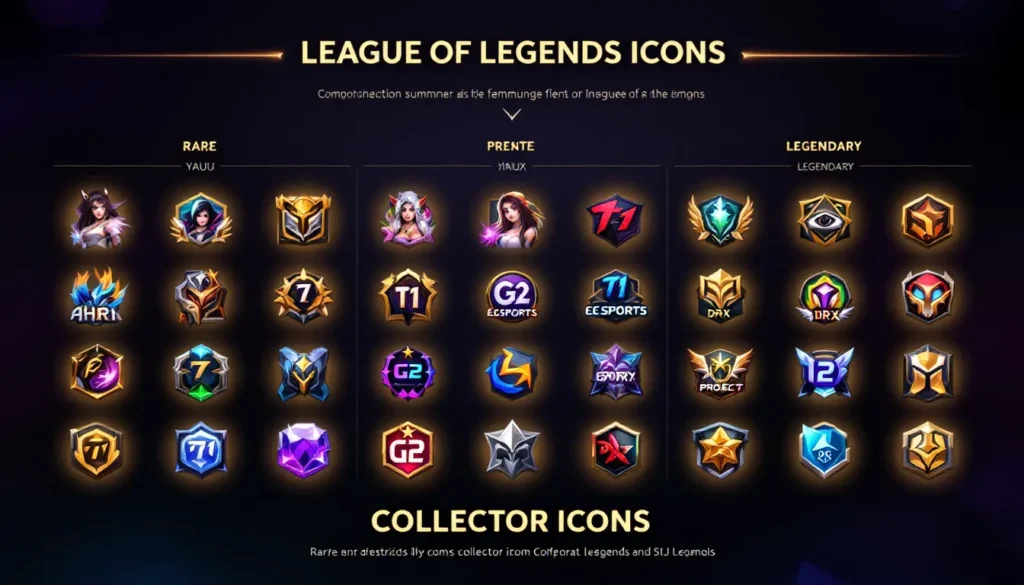
Esports team icons display the logos and branding of professional League of Legends teams from around the world. These icons are especially relevant during esports seasons and international tournaments like Worlds. Fans of T1, G2 Esports, DRX, and other pro teams use these icons to show support for their favorite organizations.
Team icons are typically available during specific periods, often tied to the professional season or major tournaments. Some older team icons have been retired, making them historically significant to collectors who followed esports during those eras.
Event and Seasonal Icons
Event and seasonal icons commemorate League’s calendar moments: Lunar Revel, Star Guardian, K/DA, PROJECT, Spirit Blossom, and more. These icons are thematically tied to the events that launched them, featuring art styles and color palettes that match the event’s aesthetic. A Spirit Blossom icon is instantly recognizable by its ethereal, nature-inspired design.
Seasons also get celebration icons tied to the ranked reset. End-of-season icons often feature unique artwork that players earn through seasonal milestones or purchase during limited windows.
Prestige and Exclusive Icons
Prestige icons are the rarest and most sought-after tier. These icons are locked behind specific conditions: earning prestige points through the pass system, reaching high ranks in competitive play, or completing exclusive battle pass missions during limited times. Some prestige icons were one-time releases that are no longer obtainable, making them among the most valuable items in any collection.
How to Obtain League of Legends Icons
In-Game Shop Purchases
The most straightforward way to get icons is through the League of Legends in-game shop. Riot’s RP (Riot Points) shop rotates seasonal and event-specific icons regularly. Prices vary: basic icons typically cost 390 RP (around $3), while prestige or limited-edition designs may cost 975 RP ($8) or more. Some exclusive bundles pair icons with other cosmetics at a bundle discount.
The shop’s rotation means you should check regularly, icons don’t stay available forever. Missing a seasonal release window can mean waiting months or years for a rerun, or accepting that you’ll never own that icon if it’s permanently retired.
Battle Pass and Seasonal Rewards
Each ranked season and major event typically includes a battle pass with free and premium reward tiers. Icons are common battle pass rewards at both levels. Free pass users can unlock basic icons by completing challenges, while premium pass holders get access to premium tier icons and exclusive designs.
Battle pass seasons usually run 2-3 months, so commitment and activity determine which icons you grab. Missing a season means missing those icons permanently (unless Riot does a rare rerun or re-release).
Mission and Event Completions
Riot regularly ties icons to special missions and event completions. Limited-time events, like celestial-themed events or anniversary celebrations, often grant free icons upon mission completion. These missions range from simple (play 3 games) to moderately challenging (win 5 games as a specific role or champion type).
This is the most accessible way for free-to-play players to expand their collections without spending RP. The tradeoff: these missions are time-gated, so you must complete them during the event window.
Limited-Time and Bundle Offers
Riot occasionally bundles icons with skins, emotes, and other cosmetics at discounted rates during sales or special promotions. Battle pass bundles, anniversary sales, and event promotions often include exclusive icons unavailable elsewhere. Regional promotions or partnership bundles (like with energy drink sponsorships) can also include unique icons with limited availability.
Bundle offers create artificial scarcity, they’re designed to feel exclusive and reward players who act quickly. Missing a bundle offer can lock you out of an icon for years.
Rarity Levels and Icon Categories
Common and Uncommon Icons
Common and uncommon icons are regularly available, released in bulk during events or seasonal rotations. These icons are accessible to most players and don’t require extreme rarity or early adoption. Basic champion icons, simple geometric designs, and entry-level event icons fall here. They’re no less beautiful or meaningful to players, sometimes a simple, clean design outshines an overly ornate rare icon.
These icons serve as the backbone of most collections. Newer players start here and build upward.
Rare and Epic Icons
Rare and epic icons require more effort or cost to obtain. These might be limited-availability seasonal releases, event icons that required multiple mission completions, or premium-tier battle pass rewards. A rare icon might have been available for only 2 weeks during a specific event two years ago. Collectors actively hunt these down during availability windows.
Rare icons begin to signal collector status, not everyone has them, but they’re not impossibly hard to grab if you play consistently.
Legendary and Ultimate Icons
Legendary and ultimate icons are the holy grail. These are permanently retired icons from early League history, prestige-tier exclusive releases, or limited bundle offers that sold out fast. Some legendary icons were available only during specific world championship years or pro team sponsorships. Owning a legendary icon proves you’ve been playing for years or were diligent enough to catch a hard-to-reach release.
These icons command respect in the community. A 2013 Rank 5 Talon icon or a retired esports team icon tells a story. Many legendary icons will never come back, making them increasingly valuable to collectors.
Most Popular and Sought-After Icons
Collectible Champion Icons
Certain champion icons are universally beloved. Ahri, Lux, Yasuo, and Jinx icons consistently top popularity lists, these champions have massive fanbases, and their icons reflect gorgeous artwork from skin lines or champion updates. Visual quality matters: an icon with clean linework, striking colors, and instantly recognizable design will always be more sought-after than a dated or muddy icon.
Champion main communities bond over icon collections. A Jinx main without a Jinx icon feels incomplete. Popular champions receive new icons more frequently, giving fans multiple versions to choose from across the years.
Retired and Discontinued Icons
Retired icons are the trophy pieces of any serious collection. These are icons that Riot explicitly removed from circulation, usually because they were tied to one-time events, limited releases, or champion reworks. When a champion gets a full VGU, their old icons often retire, replaced by new artwork reflecting the redesign.
Retired icons can’t be obtained through normal channels anymore. Trading them isn’t officially supported, but their historical significance makes them valuable pieces of League history. A player sporting a retired icon from 2010-era League is broadcasting their veteran status.
Pro Player and Team Icons
Esports team icons are passionately collected by esports fans. T1 icons, G2 icons, DRX icons, and regional pro team icons represent loyalty and fandom. During World Championship years, pro team icons spike in popularity as fans show allegiance to competing regions and organizations.
Some pro team icons have been retired as organizations fold, rebrand, or as Riot rotates out old esports content. A Season 2 Fnatic icon is a piece of esports history. Understanding esports fandom helps explain icon popularity, it’s not just cosmetics: it’s community identity. Resources like LoL Esports track professional team schedules and results, and many fans correlate their icon choices with current esports interest.
Icon Customization and Personalization
Border and Frame Customization
While the icon itself is fixed artwork, Riot allows players to customize the frame or border surrounding the icon. These frames come in various rarities and aesthetic styles: gemstone borders, prestige frames, ranked-based frames, and event-themed frames. A prestige frame elevates any icon’s appearance, signaling high investment or achievement.
The frame system lets players create visual combinations. Pairing a simple icon with an ornate, prestige-level frame can make the combo feel completely different. Some players strategically match frames to icon themes, a Spirit Blossom icon paired with a matching Spirit Blossom frame, for instance.
Seasonal Variations and Alt Icons
Some iconic champions have alternate versions released during different eras. Lux might have a Project Lux icon, a Star Guardian Lux icon, and a base Lux icon, each reflecting different skin lines and art styles. Collectors who love a specific champion often own multiple versions, essentially building a mini-collection around one champion.
Seasons also release variations. A “Season 12 Ranked” icon might have different artwork than a “Season 13 Ranked” icon, even though both commemorate ranked progression. These seasonal variations help collectors track their journey through multiple ranked seasons.
Tips for Building Your Icon Collection
Budget-Friendly Collection Strategies
Maximizing free or cheap icons requires discipline and planning. Focus on grinding seasonal missions for free icons rather than impulsively buying RP. Each patch or event typically drops 2-3 free icons through mission completion, over a year, that’s 30+ free icons if you stay active.
Prioritize battle pass free tiers over premium tiers if your budget is tight. You’ll still access solid icons without paying. During sales and promotional periods (like anniversary events), watch for bundle deals where you get more cosmetic value per RP spent.
Don’t chase every icon. Curating a smaller, high-quality collection where you love every single piece beats having 200 random icons you’ll never equip. This also keeps your RP spending focused and intentional.
Tracking Limited Releases and Events
Icons disappear permanently without warning sometimes. Follow official League of Legends social channels and patch notes to stay informed about limited-availability icons. Riot announces most limited releases in patch notes or dev blogs, but some smaller releases fly under the radar.
Setting reminders for event end dates helps you grab icons before windows close. A simple calendar entry for “Spirit Blossom event ends Sunday” prevents regrettable misses. Communities on Reddit and Discord often discuss upcoming icons, giving you advance notice to decide if something’s worth your time or RP.
Mobalytics and similar sites sometimes track icon releases and rarity tiers, though these community-maintained resources aren’t always 100% current. Checking the official League client and website remains the most reliable source.
Trading and Community Recommendations
Official icon trading isn’t supported by Riot, but communities discuss icon value, rarity, and collectibility. Reddit communities like r/leagueoflegends and Discord servers dedicated to cosmetics share collections, discuss rare finds, and recommend hidden gems you might’ve missed.
Don’t buy icons purely because they’re rare, buy them because you actually like them. A rare icon you never equip is dead weight in your collection. The best collection reflects your personal taste and gaming history, not just rarity scores.
When exploring recommended icons from community members, cross-reference with your main champions and favorite skin lines. An icon recommended as “super rare” means nothing if it’s for a champion you never play. The players sporting icons they genuinely love always look better than players desperately chasing rarity.
Conclusion
Building a League of Legends icon collection is about more than just accumulating cosmetics. It’s a way to express identity, commemorate gaming history, and participate in the broader League community. Whether you’re focused on champion icons that represent your main, esports team icons that show your professional esports allegiance, or hunting legendary retired icons that tell stories of League’s evolution, there’s a collecting philosophy for every player.
The key is intention: play actively during seasonal events to snag free icons, set priorities for paid purchases, and cultivate a collection that genuinely resonates with you. Stay aware of limited releases, missing an event window means potentially waiting years for a rerun or accepting that icon is gone forever. With 2026 bringing new seasonal releases, battle passes, and esports moments, now’s the perfect time to understand the full landscape and start building strategically. Your summoner icon deserves to be something you’re proud to display. For deeper dives into League’s champions and mechanics, resources like The Ultimate League of Legends Champions List: Roles, Strengths, and Strategies Explained offer comprehensive guides that complement any collector’s knowledge of the game.